Linear footage is not the estimate
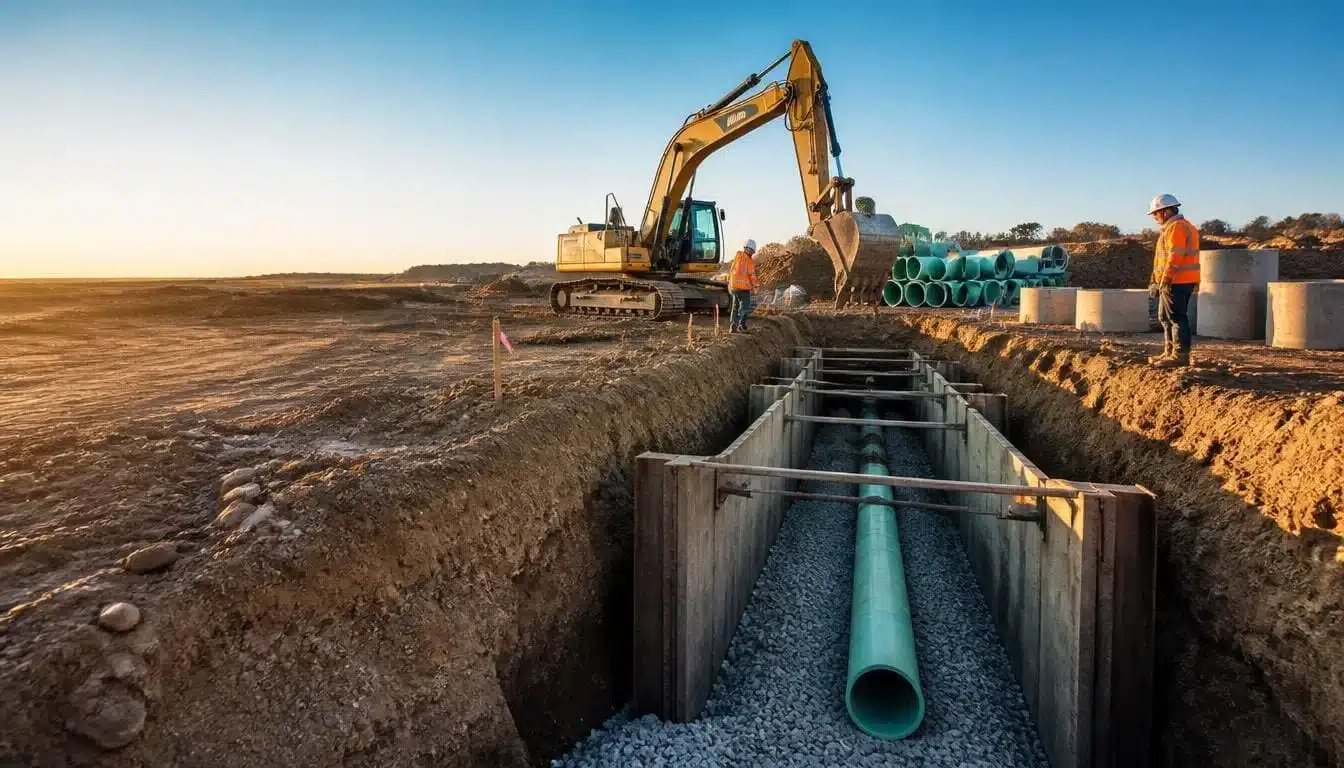
A 12-inch storm pipe buried 4 feet deep is a totally different job than the same pipe buried 16 feet deep. The deeper it goes, the more dirt has to be moved. This means more work is needed for shoring, pumping out water, and dealing with slower progress. Our engineers break down trench costs by depth. This is important so every foot of pipe includes the right amount of dirt removal and backfill to match how deep it actually goes.
Trench safety is a priced scope, not overhead
Under OSHA's excavation rules, any trench that's 5 feet deep or more must have a protective system. Once a trench hits 20 feet or deeper, that protective system has to be either designed by a licensed engineer or built using approved reference charts. Trench boxes, shoring, and sloped or stepped trench walls all take real time, real money, and real space on site. Our cost estimating company makes sure to include these costs for every section of trench.
Spoil is the quietest cost on the job
Trench spoil, bad soil that can't be reused, and clean bedding material are three separate costs. If your site utilities takeoff assumes you'll reuse the dirt from the trench while the soil report actually calls for stone bedding and select fill. You will be paying for a change order before work even starts.
Erosion control isn't a line you can skip
EPA requires a Clean Water Act permit for stormwater discharges from construction disturbing one acre or more. It can be even less than an acre if it's part of a bigger development plan. That means you need a real plan (called a SWPPP) and items like silt fencing and regular inspections. In our detailed construction takeoffs, all items are counted and priced out to deliver accurate site utilities estimating services.