
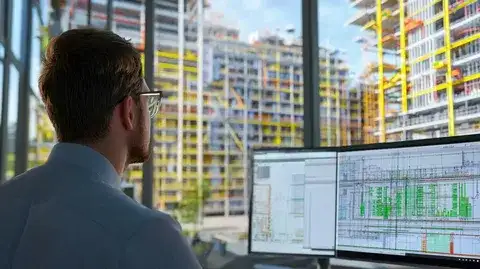
Commercial Construction Project Management is the planning and execution of a project related to business use. Such departments have the duty to complete the construction projects on time and within budget. Plus, they have to guarantee that the quality is not compromised. But only a well-planned management can ensure the execution of all processes and phases. So, you need to properly understand all the steps and apply the tips for successfully delivering a functional and valuable commercial project.
If you are going to plan a commercial construction, then you must seek professional assistance. Most building owners and contractors outsource Construction Project Management Services to reliable companies. This way, they are stress-free throughout the project phase to manage different tasks.
YOU NEED TO LEARN ABOUT CRITICAL STEPS AND TIPS TO MANAGE YOUR COMMERCIAL PROJECTS SMARTLY AND PREVENT OVER-BUDGETING AND CONSTRUCTION DELAYS!
Commercial Construction Project Management Overview
Commercial construction project management is planned before the construction process begins. It ensures flawless planning of:
- Budgets
- Schedules
- Resources
- Compliance
Commercial projects involve offices, retail spaces, hospitality venues, etc. These are complex and huge in size. That is why they require coordination among all project members.
Main Phases of Commercial Construction Project Management
1. Project Initiation
The initiation phase is the one that decides the success of the project. The main focus is on setting the budget with limited project information.
This critical first phase involves:
- Identifying the project members
- Defining project needs and objectives
- Conducting site assessments
- Establishing preliminary budgets
- Evaluating regulatory requirements and constraints
2. Design and Planning
The next phase is to plan the project according to the design. Architects and engineers have to create accurate blueprints. On the basis of these plans, all the requirements are planned. However, this phase involves the following steps:
- They have to develop architectural plans
- Architects also provide 3D models
- They need to secure the necessary approvals
- Follow quality standards
- Finalizing compliance with building codes
3. Pre-Construction
In this phase, the budget and resources are set. The team members plan the timelines and create emergency plans to prevent over-budgeting. This includes:
- Finalizing contracts and agreements
- Developing detailed project schedules
- Planning resource allocation
- Establishing communication protocols
- Setting up project management systems
4. Procurement
After finalizing the budget and resources, the materials, equipment, and labor are managed by the experts. Project managers close the best deals with the vendors by buying things in bulk. However, commercial projects demand accurate planning from concrete to HVAC systems.
- Vendor selection
- Contract negotiation
- Material quality verification
- Delivery schedule coordination
- Cost management and budget tracking
- Supply chain risk mitigation
5. Construction Execution
The construction process starts in this phase. The main thing is to keep an eye on project updates and coordinate with subcontractors. From site preparations to system installation, everything is managed in detail. Managers must:
- Monitor daily progress to prevent mistakes
- Conduct regular safety checks
- They have to manage site challenges
- Maintain quality control
- Manage change orders efficiently
Best Tips for Efficient Commercial Construction Management
1. Set Clear Goals
Set clear goals to execute your projects without error. You can use the right strategy as a guide. So, define the goal as clearly as possible. Make sure to use the resources smartly.
2. Develop the right plans
Convert your big tasks into smaller ones. It is best to use the critical path method. It will help you to identify the best timelines for all tasks.
3. Handle Risks Associated
Construction projects are always associated with risks. You have to handle it before the time comes. Plan risk mitigation strategies and set some extra money for emergency plans. For that, you can hire experts for commercial construction estimation to avoid delays.
4. Choose accurate resources
Manage labor, materials, and equipment smartly to cut costs. This also helps to prevent construction delays. It is better to use modern Building Information Modeling to improve the results.
5. Maintain Quality
It is very important to maintain the quality throughout the project. Construction managers must establish strict quality control measures. Keep every step in check and deliver high-quality results.
6. Focus on Safety
Consider safety the main thing in construction management. Construction managers must implement proper safety steps. For that, regularly conduct safety meetings and train your workers.
7. Manage Expectations
This is one of the reasons for project failure. Project managers fail to meet the expectations of builders, clients, and contractors. So, always give priority to your clients’ requirements to complete the project successfully.
Conclusion
Commercial construction project management is a time-consuming and very responsible work. It should be handled with great attention and experience. It is better to use advanced methods to meet the client’s expectations. Always start by focusing on project pre-planning. Your success depends on these factors. Otherwise, you will never be able to get more conversions. Follow our golden tips to manage your commercial projects.