
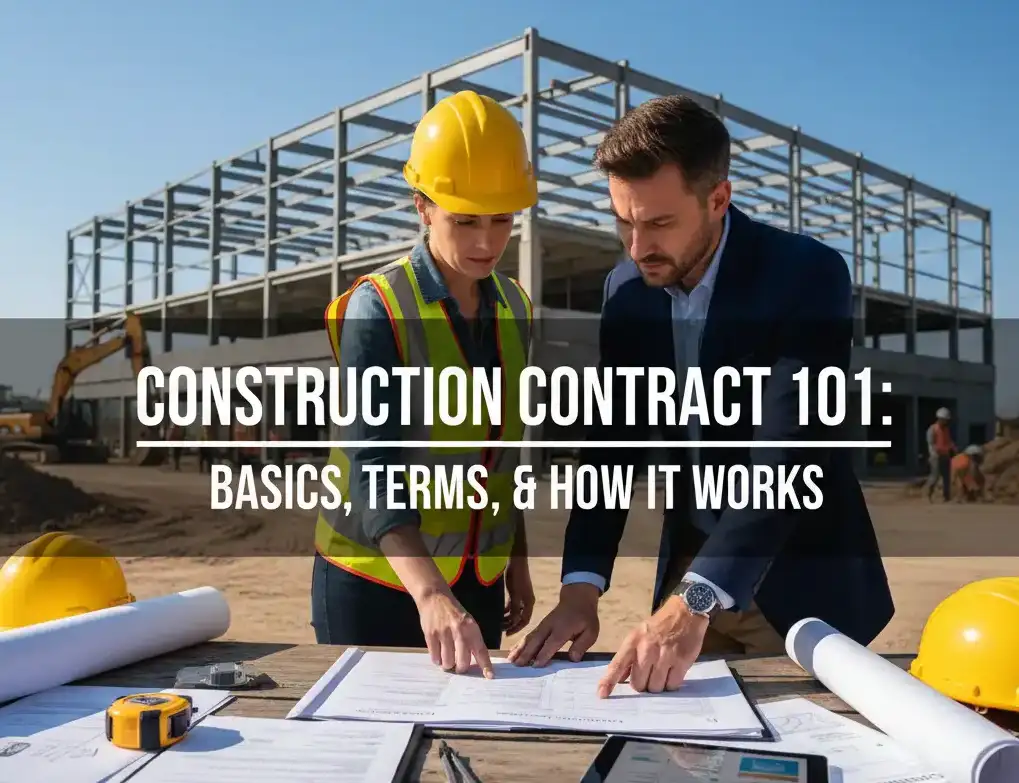
Building projects require a construction contract for successful completion. This contract is the legal base of these projects that close the best deals between owners, contractors, and other stakeholders. That is why it is important to understand the importance of construction for whoever is working in the industry.
As a beginner, it is tough to understand all the legal matters. That is why contractors hire a construction estimating company so that they manage all the legal things on point. Otherwise, a minor mistake or something missed in the contract can lead to a lot of consequences.
THIS GUIDE EXPLAINS ALL THE CONCEPTS ABOUT CONSTRUCTION CONTRACT 101, ITS BASICS, TERMS, AND HOW IT WORKS!
What Is a Construction Contract?
A construction contract is a legal document that binds the agreement between the parties involved in a construction project. It finalizes the terms and conditions. This helps in executing the projects without hurdles.
These agreements involve:
- property owners
- general contractors
- Subcontractors
- Architects
- Suppliers
The contract highlights the purpose and scope of the work and project timelines. This makes sure that everyone is on the same page. However, it is a complete financial manual of the whole project. It shows prices, schedules, and areas of work.
Why Construction Contracts Matter
Risk Management
The contract shows who will take the legal responsibility for unexpected events. It can be about construction delays and damages on-site. Plus, the experts have to provide solutions to those problems.
Cost Control
In case of a change in the designs, these contracts are an important part that lays down the right payment methodology.
Dispute Prevention
These are the steps that must be taken in case of any disagreement in the design that was agreed upon.
Legal Protection
Contracts easily address breaches. It makes sure that everything is going on in accordance with the laws.
Essential Elements of a Construction Contract
1. Scope of Work
The Scope of Work shows what exactly needs to be done and how it should be done. This includes a detailed description of the tasks to be:
- Completed
- specifications, plans
- party responsible for completing those tasks
2. Project Timeline
The contract should specify the project’s start and end dates. This helps to decide what happens in case of delays.
3. Payment Terms
This section shows the details of:
- the payment structure
- total contract price
- payment schedule
- any conditions for invoicing
4. Change Orders
The contract should outline procedures for handling changes. A change order clause guarantees that there’s a clear process to request and approve these changes.
5. Insurance
Parties should define their liabilities in case of any mishaps.
6. Dispute Resolution
Procedures for resolving disagreements should be included to prevent costly legal battles.
7. Force Majeure
A force majeure clause protects all parties from extending the timelines due to natural disasters.
Types of Construction Contracts
Lump Sum Contract
This includes a fixed price which is based on complete detailed plans for all the work included. However, this type of contract provides cost certainty for owners. It is best for projects with a clearly defined scope.
Cost-Plus Contract
In this type of construction contract law, the owner pays for the actual cost of the work. Plus, the owner also pays a fixed extra amount as the contractor’s profit. This is a reliable contract when the details of the projects are not clear in beginning.
Time and Materials (T&M) Contract
Payment is made for the accurate labor and materials used. This type of payment is better when full project details are not known at the start.
Unit Price Contract
The price is set using fixed rates for each unit of work. This is useful when the exact amount of work is not known at the time of signing the contract.
Guaranteed Maximum Price Contract
This type of contract sets a maximum cost limit for the project. If the project costs less, the savings are shared between the owner and the contractor.
Key Construction Contract Terms
Prime Contract
Main agreement where the general contractor manages the whole project work
Flow-Down Clauses
Rules are passed from the contractor to subcontractors, so everyone follows the same terms
Liquidated Damages
Fixed money paid if project deadlines or contract conditions are not met
Retainage
A small part of the payment is kept until the project is fully completed properly
Differing Site Conditions
Covers extra issues found on the site that were not expected
Indemnification
Explains who is responsible for losses, damage, or legal claims
A reliable Construction Estimating Company always considers the important and even small details to form a contract. This way, contractors can prevent all the small and big mistakes.
Conclusion
Construction contracts are the base of successful building projects. They provide clear and legal protection for all people involved in the construction project. It includes the decisions related to managing costs, timelines, and potential disputes. Understanding contract basics and important terms helps you make the perfect decisions and avoid big mistakes.