
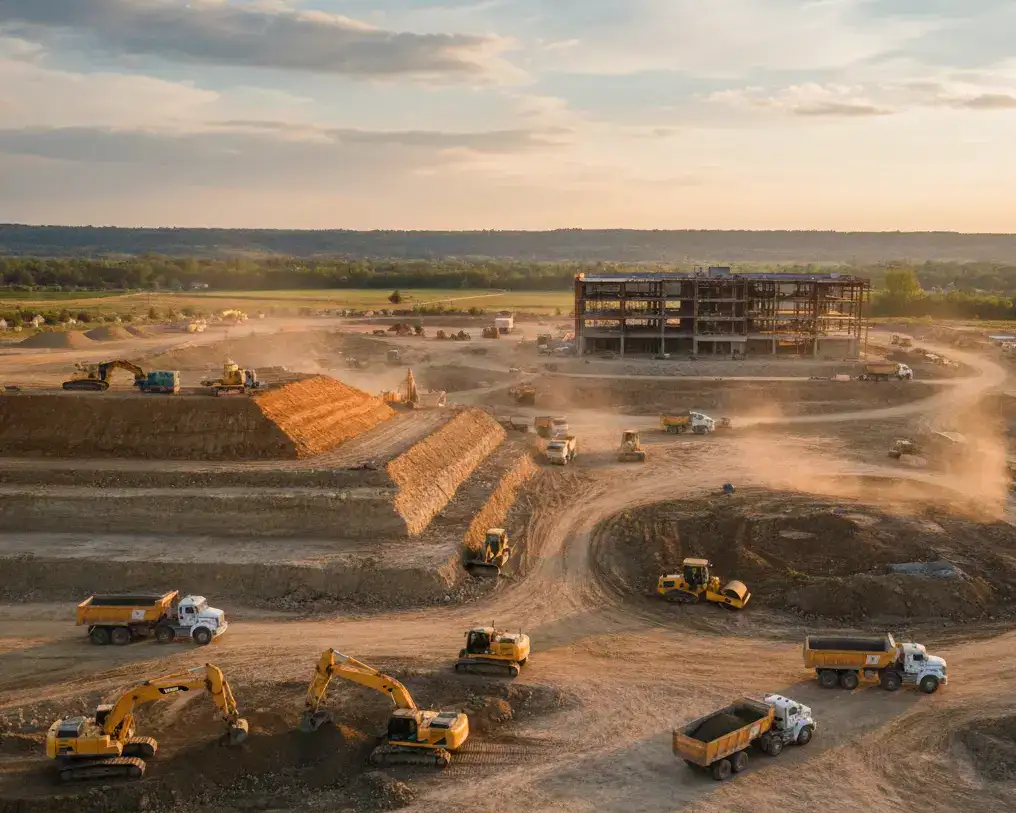
Cutting and filling is the first and basic step in preparing land for construction. Cutting and filling ensure that the buildings and landscapes can be safely developed. This technique is basically used to level the ground to build a structure. It makes the land suitable for work. We will understand the basic meaning of cutting and filling. In this article, we will also explore the major role of this process in the overall success of the construction project.
What cutting and filling really mean
Cutting and filling is basically the process of moving soil from one part of the land to another. It is used to create a flat and stable surface. Cutting means moving soil from a higher area of the site, and filling means filling the gaps where there is a lower soil quantity. Overall, this creates a balance that is needed to meet the basic demands of the construction project.
The land is naturally not even, which is not suitable for construction projects. The land is also sloped in some areas, or is too hilly. Cutting and filling help correct these and make construction more safe and cost-effective.
Engineers and contractors also use a cut-and-fill excavation method to decide how much soil to remove and how much to add to a particular area. It is mostly done for major development projects. These types of projects require careful planning and proper equipment.
Cutting and filling in site preparation
Cutting and filling in site preparation helps to achieve the following goals:
Improves land stability
Cutting and filling create an even and stable surface. Foundation cracking can be reduced. A stable base is very important for a strong building to stay permanent.
Control water flow and drainage
Leveling is very important to prevent a collection of unwanted water at a place. It can also reduce drainage problems and protect the building from moisture damage. It can also protect the building from flooding.
Meets design and elevation problems
Some projects need a specific height or elevation. Cutting and filling is very helpful in these situations.
How to cut and fill process works
Cutting and filling are not done randomly. It requires measurements and planning. It also requires an analysis of the land to be used for the project. Engineers study the natural shape of the land and make a cut-and-fill diagram. This diagram shows the high and low areas of the land. It also gives the volume of the soil needed.
A brief cut-and-fill plan is created. That plan is then used to, as it is, include, it includes excavations and fill areas. It also includes slope levels and equipment requirements. This plan can save the builders from unnecessarily taking an extra cost or wasting time.
Contractors need to know whether the soil used to fill gaps is suitable or not. Some soils are not suitable for heavy structures. Engineers decide how to treat that area according to soil type.
Balancing cut and fill for better project efficiency
Cut-and-fill process is used to balance the amount of soil that is cut from the land and the soil that needs to be filled back. If these two factors are balanced, the work becomes easier and convenient.
Things do not go like this in many situations. Soil needs to be transported away from an area. And sometimes it needs to be added to an area to level it. Proper planning is very helpful to avoid extra costs.
Contractors take the help of earthwork takeoff services to calculate soil quantities. These takeoffs show how much soil will be moved. It helps teams avoid mistakes and stay within budgets.
Equipment used in cutting and filling
Cutting and filling are done by different machinery. The most common equipment used is:
- Excavators
- Bulldozers
- Loaders
- Dump trucks
- Rollers for compaction.
Each machine plays several roles in this process.
Common challenges during cutting and filling
Sites often face different unexpected challenges. Some of the most common are:
- Soil that is too wet or too loose
- Hidden rocks or underground obstacles
- Environment restrictions
- Weather changes
- Uneven soil quality.
The issues above can cause a project to be delayed. Good planning and skilled engineers can solve these problems and keep the project on track.
How cutting and filling affect construction cost
Cutting and filling is the first and most important step of a construction project. Unparalleled areas require soil leveling. It further requires labor, fuel, equipment, and time. So, accurate budgeting is essential. Constructors often rely on construction estimates to check how much the cutting and filling process will cost before starting the project. It helps the project to stay within budget and avoid problems in further stages.
Conclusion
Cutting and filling are used for leveling the area for a construction project. It needs to estimate how much soil is needed to level an area. Engineers and builders use different methods to find the best estimates for soil quantity management for leveling. Leveling the project area helps manage water flow and improve land stability. Cutting and filling ensure that the construction can move forward safely and smoothly, whether it is a commercial building or a domestic building.