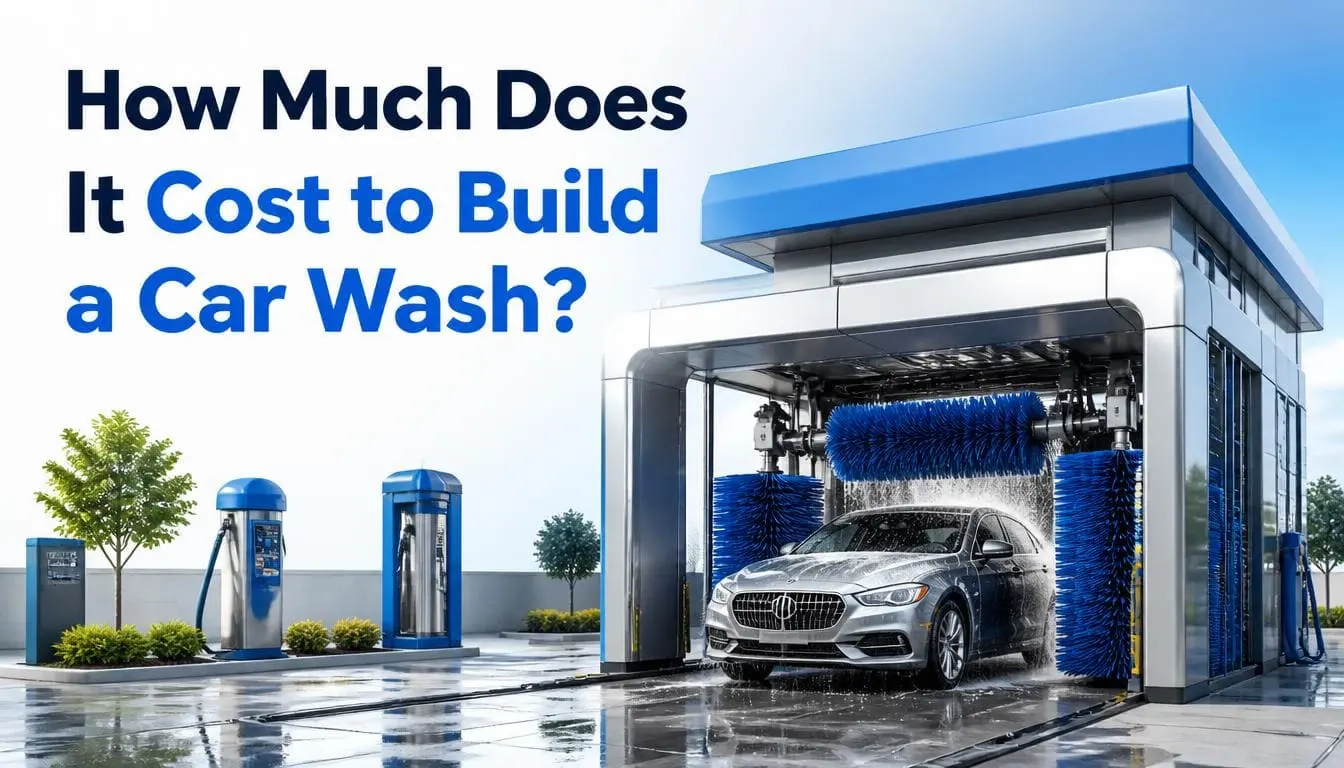
The cost to build a car wash runs from about $250,000 to $9 million in 2026. The total cost depends on the type of car wash, land value and equipment.
- A self-serve bay site costs around $477,000 to $1.03 million with land, or $250,000 to $500,000 on leased land.
- An in-bay automatic is around $789,000–$1.98 million.
- A full express tunnel on purchased land usually falls between $3.05 million and $6.84 million.
Land, equipment, and sitework account for about 53 to 65% of the total. That spread is huge, which is why smart developers never budget off a national average. Every site is different. Construction cost estimators build a line-by-line budget from the actual site plans. They calculate exact quantities of concrete yards, rebar tonnage, pipe, and conduit needed for the project.
What Does Car Wash Construction Cost by Type?
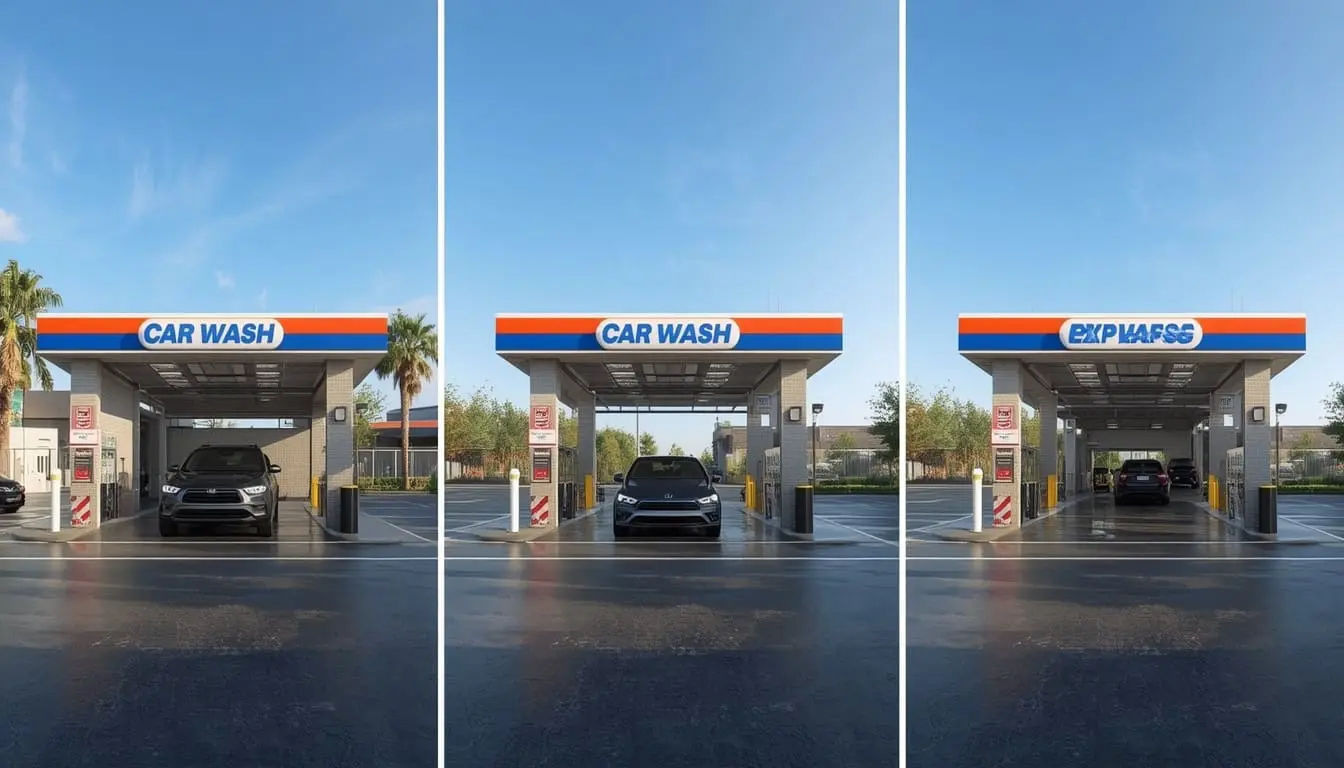
A self-serve site is mostly concrete and plumbing. A tunnel car wash cost is higher because it is a small factory. It includes a conveyor, water treatment plant, and 500-amp service.
The automatic car wash cost is higher than self-serve, and this high cost is not the machine alone. It’s the reinforced slab, the heated equipment room, the three-phase power and the drainage that the machine demands.
Here is the breakdown of cost to build a car wash by type:
| Wash type | Total build cost | Typical land need | Bays/length |
| Self-serve | $477,000 – $1.03M | 0.4 – 0.7 acre | 4 bays |
| In-bay automatic (IBA) | $789,000 – $1.98M | 0.5 – 0.75 acre | 1–2 bays |
| Express exterior tunnel | $3.05M – $6.84M | 1 – 1.5 acres | 80–130 ft |
| Full-service tunnel | $5M – $9M | 1.5 – 2 acres | 100–150 ft |
Full Breakdown of Cost to Build a Car Wash
Every line item below is a real budget row. Nothing is bundled or hidden.
| Cost item | Self-serve (4 bays) | In-bay automatic | Express tunnel |
| Land acquisition | $110K – $250K | $130K – $350K | $250K – $1.2M |
| Grading, paving, drainage | $40K – $90K | $60K – $130K | $150K – $350K |
| Utility extension (water, sewer, 3-phase) | $15K – $50K | $25K – $90K | $40K – $200K |
| Oil-water separator & sand trap | $10K – $22K | $12K – $30K | $18K – $45K |
| Stacking lane & queue paving | — | $25K – $60K | $60K – $150K |
| Building shell & equipment room | $70K – $120K | $110K – $220K | $350K – $800K |
| Wash equipment package | $80K – $140K | $150K – $400K | $1.4M – $2.1M |
| Water reclaim system | $25K – $40K | $45K – $90K | $75K – $150K |
| Vacuums & air | $8K – $25K | $15K – $45K | $80K – $250K |
| POS, gates, membership software | $8K – $20K | $20K – $55K | $40K – $120K |
| Signage & pylon | $10K – $30K | $15K – $50K | $25K – $90K |
| Design, engineering, permits | $18K – $45K | $35K – $90K | $90K – $250K |
| Interest during construction | $10K – $30K | $25K – $70K | $60K – $180K |
| Working capital & pre-opening | $30K – $70K | $50K – $120K | $135K – $330K |
| Subtotal | $434K – $932K | $717K – $1.80M | $2.77M – $6.22M |
| Contingency (10%) | $43K – $93K | $72K – $180K | $277K – $621K |
| Total | $477K – $1.03M | $789K – $1.98M | $3.05M – $6.84M |
Note: Read the lower prices as a secondary-market site with cheap land and a modest equipment package. Read the higher prices as a busy corner lot with a premium wash package.
Planning to build a car wash? Work with the best estimating company to get a detailed cost estimate based on your project plans. So you can start your project with confidence.
Why Do Land and Site Work Cost More?
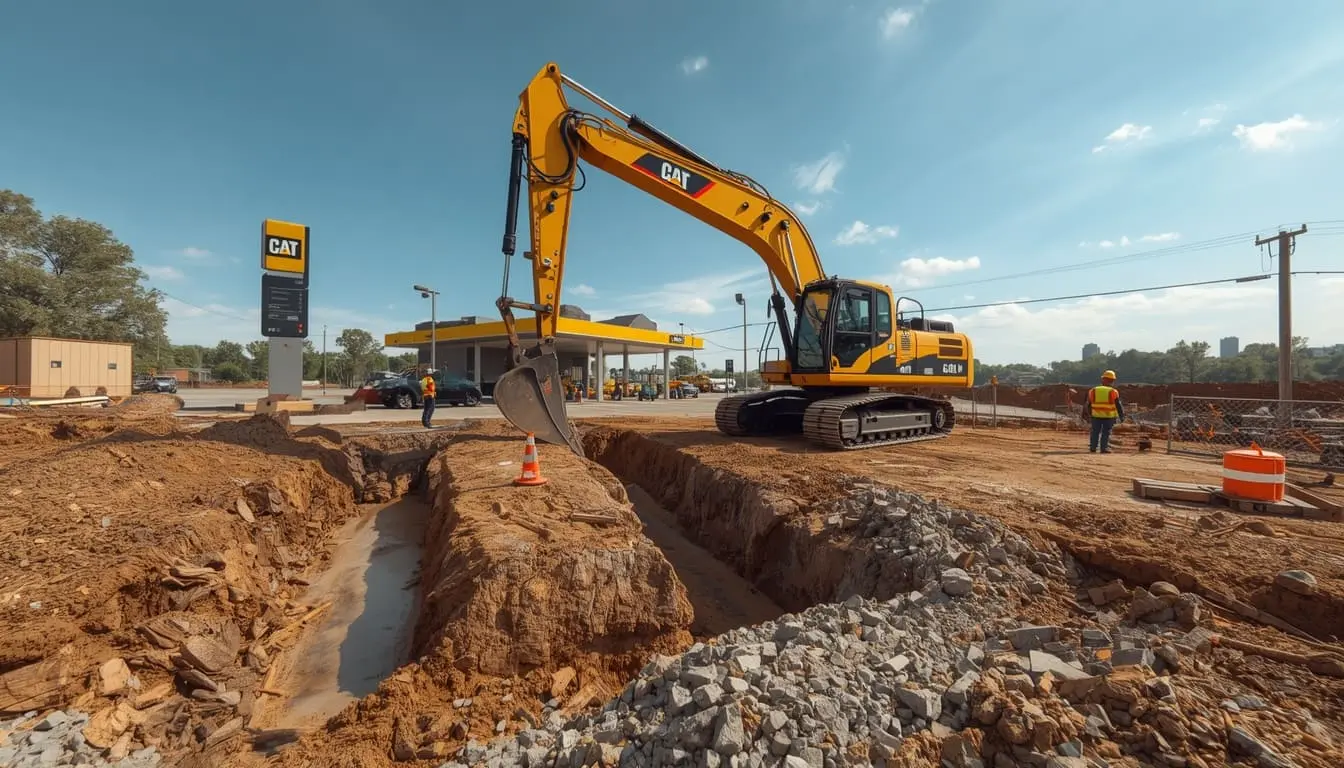
Land cost varies a lot. The price of a three-quarter-acre lot on a side road ranges between $110,000 and $250,000. A busy corner lot with 25,000 automobiles passing every day can cost $1.2 million or more.
The cost of site work is $4 to $7 per square foot. This includes grading, paving, utilities and drainage. Car washes need more drainage than other buildings. So budget more than a typical retail pad.
Utility extension is where budgets break. If power or water lines are far away, the cost can increase quickly.
Why Is Equipment the Biggest Single Line Item?
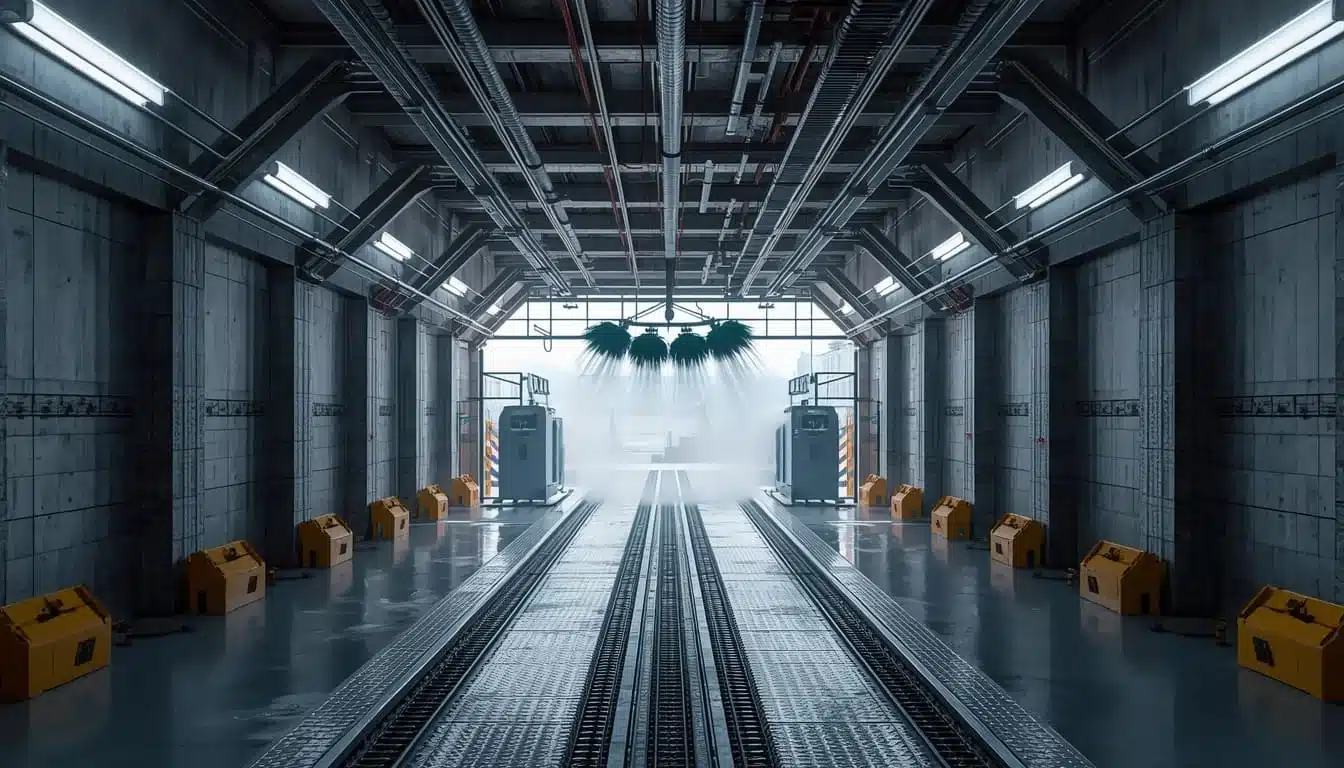
The wash package alone is 31 to 46% of a tunnel budget. Add reclaim, vacuums, and payment hardware, and equipment approaches half the build.
Water reclaim is not optional in most jurisdictions now, and it pays for itself. The 2018 Car Wash Water Use Study by the International Carwash Association measured six conveyor sites and found average freshwater use of 30 gallons per vehicle, down from 34 gallons in the 2002 study. In-bay automatics averaged 44.8 gallons.
The EPA’s WaterSense at Work guidance confirms reclaim systems are the single largest water-saving retrofit available to conveyor sites. At 150 cars a day, cutting 15 gallons per wash saves over 800,000 gallons a year.
How Is 2026 Pricing Changing Car Wash Construction Costs?
Construction budgets are still increasing. Mortenson’s Q1 2026 Construction Cost Index put nonresidential construction costs up 1.7% for the first quarter of 2026 and 6.8% year over year, with metal prices and tariffs driving the increase. JLL’s mid-2026 update shows final-cost indices close to 5% annually and anticipates further pressure in the second half of the year.
For a $3.5 million tunnel, a 6% escalation is $210,000. That’s the gap between a deal that pencils and one that doesn’t.
Two practical moves protect the number:
- Lock equipment pricing early. Wash packages carry a lead time of 16 to 24 weeks.
- Keep at least a 10% contingency in your budget.
With fluctuating material costs, an accurate material takeoff will help determine the correct amount of materials required before starting construction. This reduces waste and helps to give a more accurate overall cost estimate.
What Does a Car Wash Earn Back?
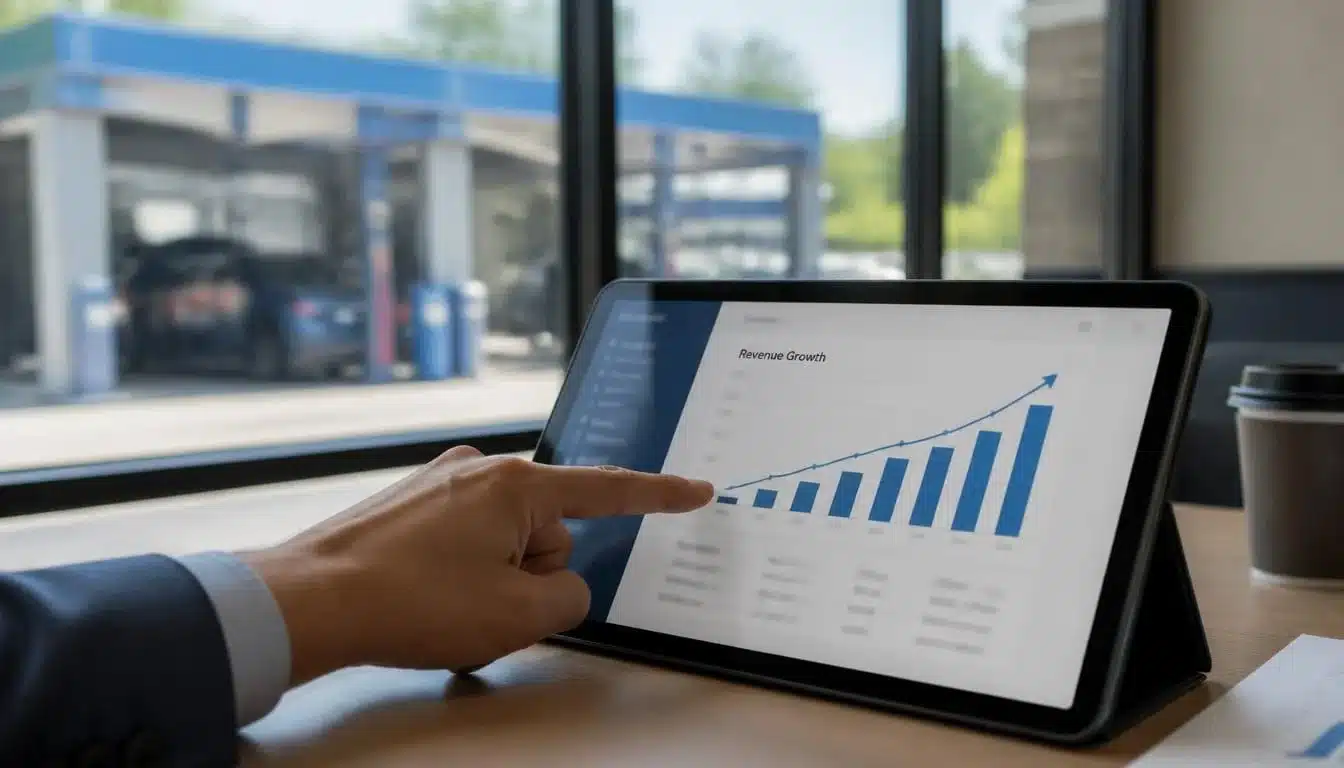
An express tunnel washing 130 cars a day at a $12 average ticket earns about $570,000 a year. At 45 to 55% margins, that’s $256,000 to $313,000 in profit. Payback on a $3.05 million build takes 10 to 12 years.
Memberships increase income. A $25 monthly unlimited plan with 1,000 members brings in $300,000 a year that does not depend on weather. That’s why tunnels sell memberships hard from day one.
The U.S. car wash market is also growing. IBISWorld’s February 2026 report puts U.S. car wash and auto detailing at $18.7 billion across 16,879 businesses, growing 1.5% a year since 2021.
The Bottom Line
The cost to build a car wash depends on the type you build, the land you buy, and the costs you forget. Self-serve starts near $477,000. An express tunnel starts near $3 million. Price it from site plans before you sign anything. Include all construction costs, utility work, permits and opening expenses. Projects rarely fail on the equipment quote. They fail on the utility run, the drainage, and the working capital nobody set aside.
Frequently Asked Questions
Q1: Why are other cost estimates so much lower?
Most published ranges cover building and equipment only. They exclude land, permits, engineering, construction interest, signage, and pre-opening working capital.
Q2: How much land do I need for an express tunnel?
You may need 1 acre minimum and 1.5 acres comfortably. You need the tunnel footprint, a stacking lane holding 8 to 12 cars, a pay station lane, and 10-20 vacuum stalls. Sites under one acre force compromises on queuing. Short queues cap throughput on your busiest Saturday.
Q3: Is it cheaper to convert an existing building?
Rarely. Conversions look cheap until you price the slab. Wash bays need sloped floors, trench drains, corrosion-resistant framing, and heavy utility service that retail shells don't have. Most conversions land within 10–15% of new construction, and you inherit whatever the previous foundation was designed for.
Q4: How long does construction take?
It takes nine to fifteen months from land purchase to opening. Entitlements and permits take three to six months, sitework two to three, and vertical construction plus equipment installation four to six. Utility coordination is the most common delay, so start that conversation before you close on the land.